
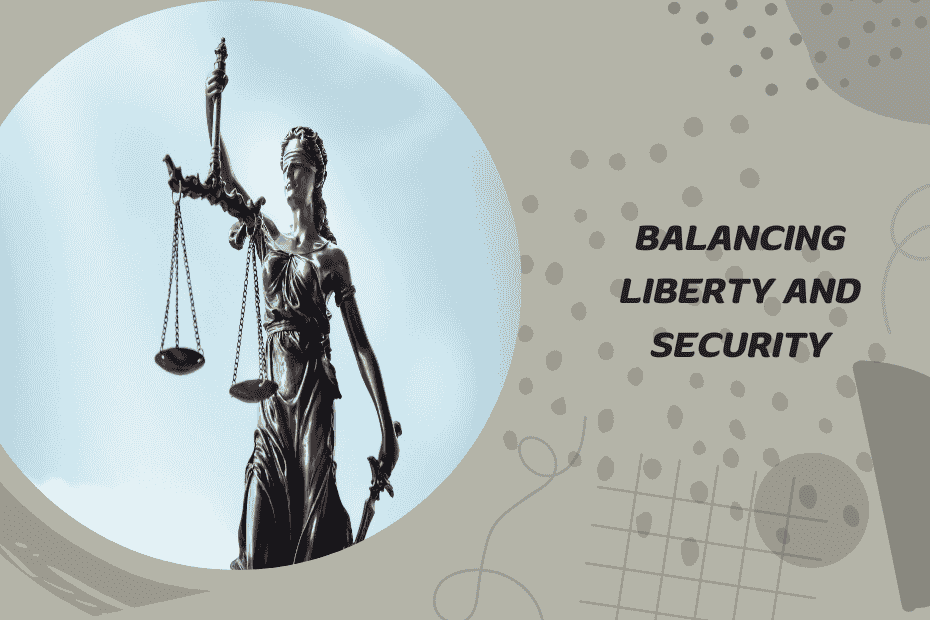
As technology continues to evolve at a rapid pace, the tension between liberty and security is becoming more pronounced. In the United States, two core ideals—individual freedom and collective security—are often in conflict, especially as emerging technologies offer both unprecedented protections and risks. The ongoing challenge is how to balance these ideals without compromising the values that define the American identity. Let’s explore how the rise of AI, surveillance, and other advanced technologies are reshaping this debate.
The Role of Technology in National Security
Since 9/11, America’s approach to security has fundamentally shifted. Technologies that enable mass data collection, surveillance, and predictive analytics have been used to enhance national security. Systems such as facial recognition, data monitoring, and even AI-driven intelligence analysis have allowed governments to act preemptively against potential threats. These tools promise safety but often come with a trade-off: personal privacy. For many, the question is whether the government should have the power to collect massive amounts of data, even in the name of preventing terrorism.
Recent advancements in AI and big data analytics have intensified this debate. On one hand, these technologies can detect and prevent crimes before they happen, potentially saving lives. On the other hand, they risk infringing on civil liberties by surveilling ordinary citizens who have committed no crime, leading to concerns about privacy and freedom.
Privacy vs. Surveillance: Where Should We Draw the Line?
As surveillance technology grows more sophisticated, the lines between protecting public safety and invading personal privacy become increasingly blurred. Facial recognition, for example, is being used in airports, public spaces, and even schools to monitor behavior. These systems can identify and track individuals, raising concerns about how much oversight is too much.
Some argue that enhanced surveillance can reduce crime and prevent terrorism, but others worry about the potential for abuse. If governments have access to personal data and surveillance tools, there is a risk that these technologies could be misused to target political dissidents or marginalized groups.
Finding a balance between the need for security and the protection of personal freedoms is one of the most pressing challenges in the digital age.
AI and Predictive Policing: A Threat to Liberty?
Another controversial use of emerging technologies is predictive policing, which uses AI algorithms to analyze data and predict where crimes are most likely to occur. While proponents of this technology argue that it can prevent crime more effectively, critics point out that these systems are prone to bias. For example, if the historical data used by these algorithms is biased against certain racial or socioeconomic groups, the AI may perpetuate and even amplify these biases.
The use of predictive policing also raises ethical questions about whether people should be monitored based on their likelihood to commit a crime, rather than actual behavior. This approach challenges the presumption of innocence, a fundamental principle in American justice.
The Internet of Things (IoT) and Civil Liberties
The rise of the Internet of Things (IoT)—where devices are increasingly connected and share data—further complicates the balance between liberty and security. Smart devices, from home security cameras to medical devices, constantly collect and transmit data. While this offers tremendous benefits in terms of convenience and safety, it also opens up new vulnerabilities for personal privacy.
A key concern is how companies and governments use the data collected by IoT devices. If personal information is shared with third parties or used for purposes beyond its original intent, individuals may feel their rights are being compromised. Ensuring that IoT systems are both secure and transparent is essential to maintaining public trust.
Government Surveillance and Public Opinion
Public sentiment around government surveillance has shifted over the years. In the wake of major terrorist attacks, Americans have often been more willing to accept certain infringements on their civil liberties in exchange for greater security. However, there has been growing concern over the extent to which the government monitors citizens, especially as technology makes it easier to collect personal data without consent.
The balance between liberty and security is a constant tug-of-war, with different administrations and political climates influencing where that line is drawn. Some advocate for increased transparency and stricter regulations around surveillance technologies to protect individual freedoms.
Moving Forward: A Path to Balance
In navigating this delicate balance, it is essential to create policies that protect both national security and individual liberties. Legal frameworks need to be updated to address the capabilities of modern technology, ensuring that personal data is protected while allowing for the use of technology to enhance safety.
Moreover, governments must work to build public trust by being transparent about how data is collected and used. As these technologies continue to evolve, the conversation must remain centered on protecting American ideals while adapting to new security challenges.
Key Challenges in Balancing Liberty and Security
- Mass surveillance vs. individual privacy
- Bias in AI-based predictive policing
- Data collection from IoT devices and transparency
- The ongoing debate on government overreach in the name of security
Conclusion: Can Liberty and Security Coexist?
Emerging technologies undoubtedly provide powerful tools to enhance security, but they also raise critical questions about privacy, surveillance, and civil liberties. In the digital age, finding a balance that upholds American values of freedom and security will require careful consideration, ethical governance, and public accountability. Only by addressing these challenges can we ensure that both liberty and security can coexist without undermining the foundation of American democracy.